
Understanding the Role of Maternal Autoantibodies in Autism

This article provides an educational overview of the scientific understanding of maternal autoantibodies and autism, written for families, caregivers, advocates, and organizations that support individuals impacted by autism. It is informational in nature and not intended to replace medical advice or clinical decision-making.
Understanding Autism as a Spectrum with Multiple Contributors
Autism spectrum disorder (ASD) is a neurodevelopmental condition marked by differences in communication, social interaction, and patterns of behavior. Research has consistently shown that autism does not arise from a single cause. Instead, it reflects a complex interplay of genetic, biological, and environmental factors that can vary widely between individuals and families.
Increasingly, researchers are finding that autism may develop through different biological processes in different groups of children. One such biological process involves the maternal immune system and the presence of specific maternal autoantibodies, an area supported by a substantial and growing body of scientific and clinical evidence.
What Are Maternal Autoantibodies? 1-3
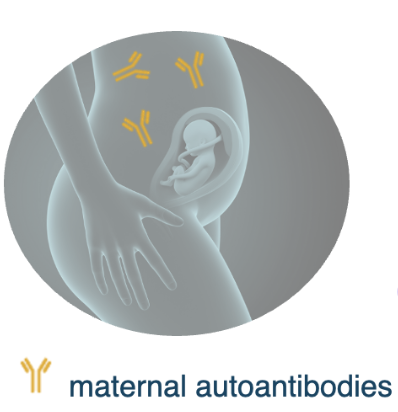
Autoantibodies are immune proteins that mistakenly target the body’s own tissues instead of foreign pathogens. In some individuals, autoantibodies may circulate without causing noticeable symptoms.
During pregnancy, a mother’s antibodies naturally cross the placenta to help protect the developing fetus. Researchers have identified that in a subset of mothers, specific autoantibodies have been shown to recognize proteins involved in fetal brain development.
These antibodies are referred to as MARA (maternal autoantibody related autism).
What the Research Shows
Multiple peer-reviewed studies over the past decade have identified a consistent association between specific maternal autoantibodies and an increased risk of autism in offspring.
Key findings from this body of research include:
Certain autoantibody combinations are highly specific to mothers of children diagnosed with autism
These antibodies target proteins that play a role during pregnancy in early brain development
The association has been observed in independent study populations, strengthening scientific confidence
This mechanism appears to cause only a subset of autism cases, not all autism
Importantly, these findings do not suggest that maternal autoantibodies are the sole cause of autism, nor that all mothers of autistic children have these autoantibodies. Rather, they represent one identifiable biological process among many.
A Distinct Subgroup Within the Autism Community
Researchers often refer to this subgroup as maternal autoantibody–related autism (sometimes abbreviated as MAR-Autism or MARA).
Understanding autism through subgroup identification helps researchers:
Better understand the diverse presentations of autism
Reduce oversimplified explanations
Develop more tailored tools for families seeking information
This approach reflects a broader shift in medicine toward recognizing that complex conditions may arise through multiple, distinct biological mechanisms.
Why This Research Matters to Families
For families who already have a child with autism, questions about recurrence risk, family planning, and biological factors are common.
Emerging research on maternal autoantibodies may help some families:
Better understand one possible contributor to autism within their family
Access more personalized information when planning future pregnancies
Feel validated that autism research continues to evolve beyond one-size-fits-all explanations
It is important to note that information is empowering for some families and may feel overwhelming for others. Choosing how much information to engage with is a highly personal decision and may not be a good fit for every situation.
From Research to Clinical Tools
As scientific understanding advances, researchers have worked to translate these findings into validated laboratory methods capable of identifying the relevant autoantibody combinations in maternal blood samples.
These tools are designed to:
Identify whether the specific maternal autoantibody combinations are present
Provide information for families and clinicians, not predictions or guarantees
Support informed discussions between patients and qualified healthcare providers
Shared decision making with an individual's provider can assist in pursuing this type of testing.
Important Considerations and Limitations
While the research is compelling, several important points should be emphasized:
Maternal autoantibodies are associated with a high risk of autism in a child, but is not diagnostic
Autism remains a complex condition with many contributing factors
MAR-Autism is expected to affect a subset of families, not all patients with autism
Decisions about testing or care should always involve qualified healthcare professionals
Scientific research continues to evolve, and ongoing studies aim to further refine understanding, expand validation, and explore how this knowledge can best support families.
Why Awareness Matters
Many families report that they were unaware this line of research existed until actively searching for answers. Increasing awareness of maternal autoantibody research helps ensure that families who want this information know it is available.
Awareness does not mean obligation. Rather, it supports informed choice, respectful dialogue, and individualized decision-making.
Autism research has progressed significantly over the past several decades, moving from generalized theories toward more precise biological understanding. Research on maternal autoantibodies represents one important example of this progress.
For families navigating autism, whether focused on today’s needs or future planning, access to clear, balanced, and compassionate information remains essential.
For more information, view our frequently asked questions. If you are interested in MAR-Autism testing, visit our request test page.
This article is provided for educational purposes only and is not intended as medical advice or a substitute for consultation with a qualified healthcare professional.